
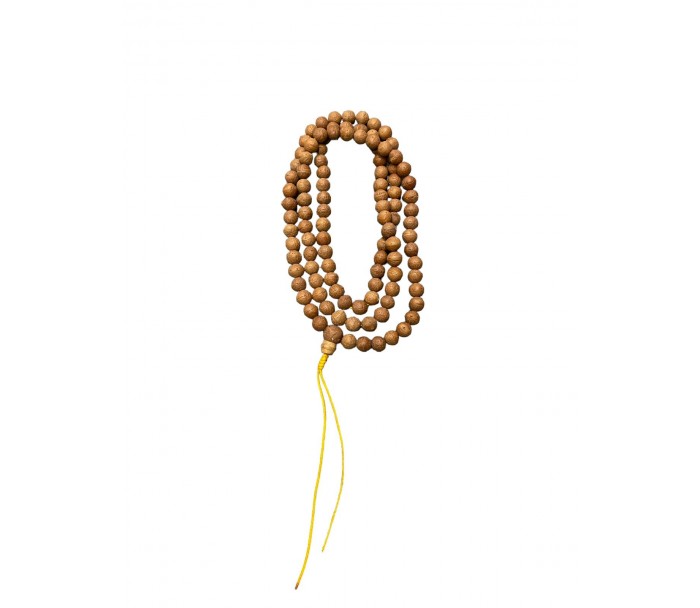
Buddha chitta mala
- Product Code: HC001828
- Availability: In Stock
-
HKD $2,200.00
Buddha chitta mala is also known as Tibetan mala or Buddhist rosary, is a string of beads used for counting prayers, mantras, or breaths during meditation or recitation. It is an important tool in Tibetan Buddhism and holds spiritual significance. Here is some information about Tibetan Buddha chitta mala:
Beads: A traditional Tibetan mala typically consists of 108 beads, although some may have 27 or 54 beads. The number 108 is considered sacred and has symbolic meaning in various spiritual traditions. The beads are usually made from materials such as wood, seeds, bone, or gemstones. Each bead represents a mantra or prayer recitation.
Guru Bead: The Buddha chitta mala often has a larger bead, known as the guru bead or meru bead, which serves as the starting and ending point of the mala. It is usually larger or more decorative than the other beads and may be made of a different material. The guru bead symbolizes the guidance of the spiritual teacher or guru.
Tassel: Hanging from the guru bead, there is usually a tassel made of threads. The tassel represents enlightenment or the roots of the lotus flower, symbolizing the path to enlightenment. It also serves as a reminder of compassion and interconnectedness.
Counting: When using a Buddha chitta mala, practitioners hold the mala in their right hand and start reciting their chosen mantra or prayer. With each recitation, they move to the next bead by sliding it between their thumb and middle finger. The index finger is believed to represent ego and is therefore not used to touch the beads.
Symbolism: The act of using a Buddha chitta mala is considered a form of meditation and mindfulness. It helps practitioners maintain focus and concentration during their spiritual practice. The repetition of the mantra or prayer with each bead is believed to generate positive energy and purify the mind.
Buddha chitta mala are not only functional but also serve as a spiritual accessory and a personal reminder of one's spiritual path. They are cherished by Tibetan Buddhists and are often worn as necklaces or bracelets, as well as used in meditation practices.